

Among Yawen’s most recognized works is ‘Burning My Poems’.


In modern filmmaking, audiences often remember a feeling before they remember a shot. A scene can linger in the memory because it feels haunting, hopeful, intimate, nostalgic, or emotionally overwhelming. Behind many of these emotional reactions is an artist rarely seen by audiences but increasingly recognized by the film industry: the colorist.
The article continues below the ad
For Los Angeles-based colorist Yawen, color grading is not a final step. It is storytelling in itself.
Working across documentaries, narrative films and commercially successful television productions, Yawen has built a reputation for using color to not only enhance images, but to shape emotion, reveal psychology and guide audience perception. Through award-winning work, Oscar-eligible festival selections, commercial success reaching millions of viewers, and growing influence within the professional community, she has emerged as a remarkable emerging colorist helping to expand the artistic possibilities of contemporary visual storytelling.
The article continues below the ad
Among Yawen’s most recognized works is Burning My Poems, a documentary related to the disappearance of Malaysia Airlines Flight MH370. The film follows a family member who continues to search for answers years after the tragedy and refuses to give up hope despite the passage of time.
The project was selected for the Dehancer Colourist Awards, one of the few international competitions specifically dedicated to recognizing excellence in cinematic color grading. Unlike traditional film awards that evaluate a project as a whole, the Dehancer Colourist Awards direct attention to the colorist’s artistic contribution. Submissions are reviewed by professional colorists and industry experts whose careers are dedicated to advancing the craft of visual storytelling through color.
The article continues below the ad
For Yawen, the project represented an opportunity to use color as a language of emotion.
Throughout the documentary, saturated greens and blues function as recurring psychological motifs. Green symbolizes persistence, endurance and the fragile continuation of hope. Blue evokes absence, emotional distance, uncertainty and the great unknown that surrounds disappearance itself. Together, these colors create a visual environment suspended between memory and reality, reflecting the emotional state of a family member who is unable to stop searching.
The article continues below the ad
In contrast, sequences built around recollection and personal memory utilize restrained saturation and softer tonal relationships. These muted palettes suggest nostalgia and emotional stagnation, visually expressing a life partially trapped in the past. Rather than simply illustrating events, the color design allows the audience to experience the psychological weight of remembrance.
Projects like Burning My Poems demonstrate why the colorist’s role has become increasingly important in modern film production.
The article continues below the ad
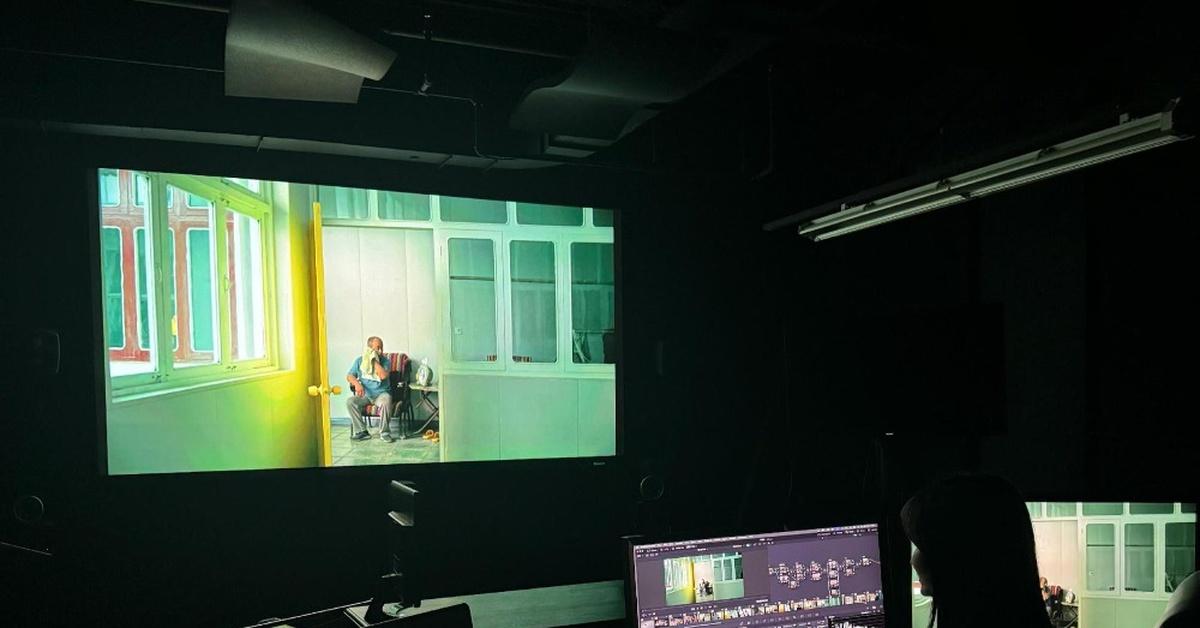
A colorist influences how the audience emotionally interprets each image. Through subtle control of saturation, contrast, highlight behavior, shadow density, color ratio, and visual texture, a colorist can transform the emotional meaning of an image without changing a single line of dialogue. The audience may not consciously recognize these decisions, but they experience their effects immediately. At the highest level of film production, color grading is not a technical correction process. It is a form of authorship.
The article continues below the ad
Yawen’s ability to integrate color into narrative storytelling is equally evident in My Demon, a narrative short selected by the Cinequest Film Festival, one of the most respected independent film festivals in the United States and an Oscar-qualifying event recognized for showcasing innovative cinematic voices.
For My Demon, Yawen designed a visual language built around the tension between dream and reality. Drawing inspiration from photochemical film aesthetics, she developed a cinematic look characterized by organic highlight roll off, rich color separation and subtle texture that evokes the emotional qualities of traditional feature film.
The article continues below the ad
Certain sequences employ dreamlike color ratios and delicate tonal transitions to reflect the character’s inner psychological state. Other moments embrace naturalistic realism, particularly sunrise scenes that gradually transition from cool blue hour tones to warm golden light. Through these shifts, color becomes a visual representation of transformation, leading the audience through emotional states that words alone could not communicate.
Across projects such as Burning My Poems, My Demon, Cocoon and A Door, a consistent philosophy emerges: color is not treated as decoration, but as narrative structure. In addition to festival-acclaimed films, Yawen has established a significant presence in the fast-growing television miniseries and vertical drama industries.
The article continues below the ad
As an in-house colorist, she has color-graded nearly thirty productions, including several titles that have reached millions and in some cases tens of thousands of views globally. Several projects have also received nominations and recognition within the vertical drama industry.
Her work shows that cinematic color language is not limited to independent cinema. Employing sophisticated storytelling techniques developed through narrative filmmaking, Yawen helps raise visual standards in short form commercial entertainment, bringing greater emotional depth, visual sophistication and cinematic quality to productions consumed by a global audience.
The article continues below the ad
The recognition of Yawen’s contribution extends beyond individual productions. Reflecting growing recognition of her accomplishments and influence in the field, Long Beach City College invited her to participate in a professional color grading workshop.
Such invitations are typically issued to professionals whose work demonstrates meaningful artistic achievement and whose perspectives can help inspire future generations entering the profession. As color grading continues to evolve into one of cinema’s most important creative disciplines, practitioners like Yawen play an increasingly influential role in shaping artistic standards and expanding the possibilities of visual storytelling.
The article continues below the ad
Through internationally recognized award selections, Oscar-qualifying festival projects, commercially successful productions seen by millions and growing influence within the professional community, Yawen has established herself as a creative force whose contributions extend beyond individual films and into the broader development of modern color grading.
Her work shows that color is far more than a finishing touch. It’s feelings. It is memory. It’s psychology. It’s history. And in Yawen’s hands, it becomes one of the most powerful narrative tools in modern cinema.













Leave a Reply