
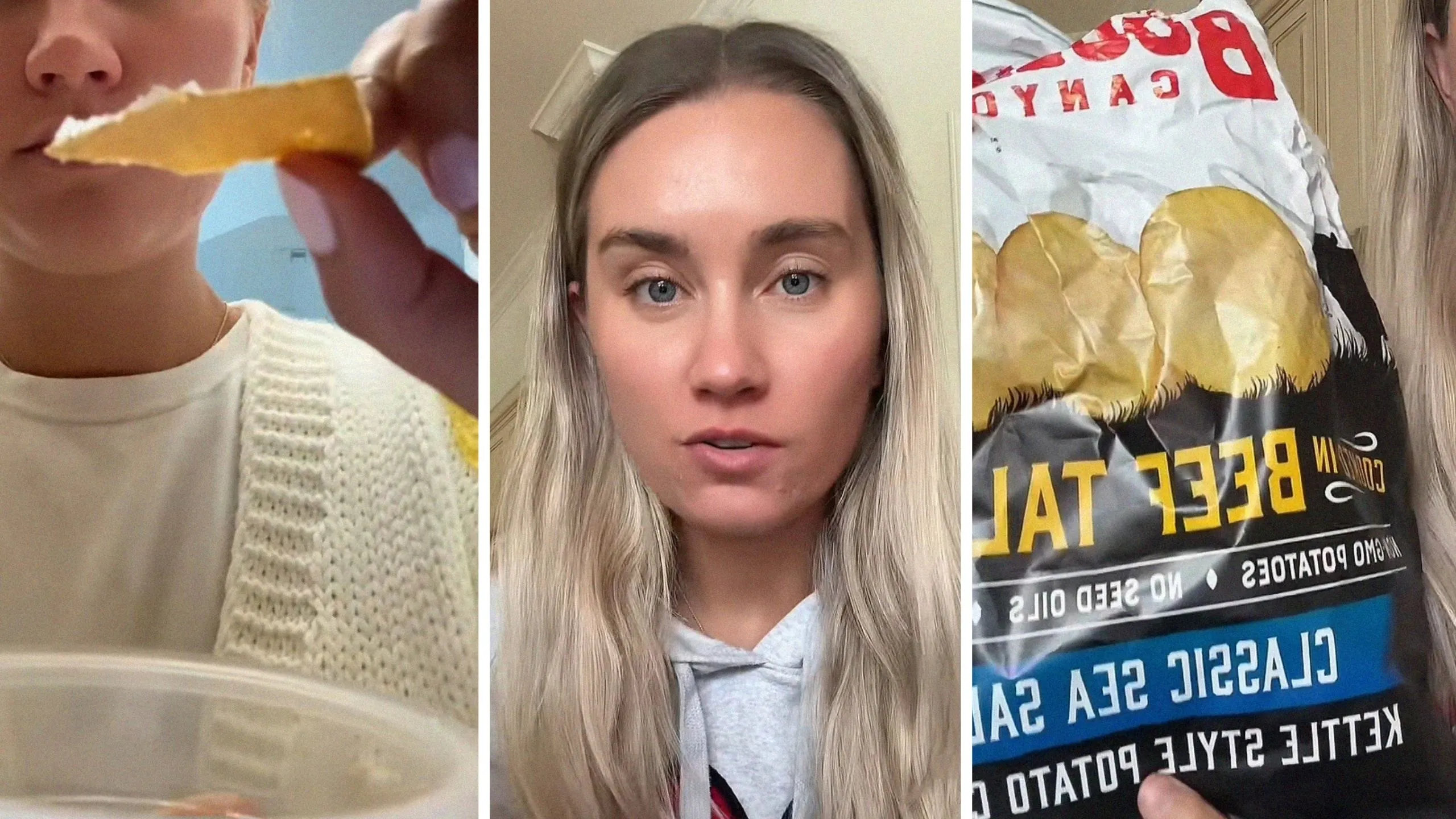
Chips are not the healthiest of snacks, but they are beautiful hard to resist. However, the way one TikToker eats salty left the internet with her chips divided.
Chips have gone viral on the internet before, whether before Potato chips that grow carrots or for the stingy portions of Doritos in bags. However, TikToker Callie (@callieeeef)’s chip videos have sparked a different kind of debate.
The main video, which has 6.4 million views, shows her reaching into her bag of chips, opening a container of salt and dipping the chip in, coating it with a generous layer of salt. She then appears to eat the chip, and does this several times.
What did commenters say?
The vast majority of commenters were concerned.
“Hey, hi. Nurse here,” one person wrote. “Stop that. Immediately.”
“Hey sis! So this was me and it turns out I have Addison’s disease,” a second added. “Go do your labs!”
While a third joked: “Hi, I’m an EMT. Love the lemon sweater btw! Do you mind if I come over with my ambulance to see it?”
Similarly, a fourth said: “Hey twins! I’m bored. We need to get blood work done together!”
Meanwhile, a fifth said: “This was me… Then I found out I have POTS… now I have a reason to keep eating hella salt.”
Still, there were other commentators who defended this dietary choice. “Everyone says labs need to be done. I’m obsessed with salt, I chew ice cream… My labs are perfect every time… Some people just love salt and s…,” claimed a sixth.
What else happened?
Callie then gave one follow up video.
As she continued dipping and eating, she said, “There’s a video of me eating tortilla chips with sea salt, and it explodes. I don’t know why.”
“I get all kinds of comments, from ‘I need to go to the doctor’ to ‘I found my best friend’. But I did it with tortilla chips. Is that okay with you?” she asks.
The TikToker then picks up the bag of chips and shows them to viewers, sharing that they are the Border chips with the beef fat.
“So good,” Callie added, eating her way through the salt and chips. “You’re having a steak dinner.”
“And for those of you asking, no, I don’t eat sea salt all the time.” She then held up a bag of Realsalt and told viewers that she usually eats this salt. “It’s Realsalt with real minerals,” she added.
“A lot of the salt we eat doesn’t have the minerals we need. So I use that salt. And then when I want to make it fancy, I use the flaky sea salt that you can literally get anywhere,” she explained. Callie then covered a chip with sea salt and held it up to the camera.
“And for all the people saying I have low iron, or I have POTS, or whatever the other comments were,” she said. “Um, I haven’t. I did have blood work done and my blood work is completely normal, I just want salt.”
Callie then pointed out that she doesn’t do this all the time: “Sometimes I just want salt and I want chips. It’s my salsa!”
The video is covered with on-screen text, “Saltsa,” along with an emoji of a salty and dancing woman.
Get to know ‘Saltsa’
Callies second sequel contained the same overlapping text. With her trusty combination of salt and chips, she told viewers: “Before you call me crazy, try it for yourself.”
She then debunked the claim that she cut videos to make it appear that she was consuming salt when she was not, and further denied that her video was “ragebait.”
“You may think that, but I just like salt,” she said, before continuing to eat the combo.
In this video she ate the Boulder Canyon chips with dill pickle and salt. The TikToker also noted that her favorite flavors were the classic and beef tallow.
“Yeah, I’ll drink water after this,” Callie added as she continued with her snack.
She then noted that viewers are “not ready” for her “butter videos.”
“I eat butter like it’s a blueberry,” she admitted. The TikToker pointed out that a commenter found the butter video further down her page and commented on it.
“I’m surprised more of you haven’t found it,” Callie added. “But someone did and made me giggle because I eat a lot of butter.”
Does she do this often?
In an email interview with BroBible, Callie said, “I realized I was doing something that most people probably don’t do, so I thought it would be fun to post.”
When asked about the reception of her video, she classifies it as “crazy,” adding, “Most of the comments were negative and/or others concerned about my health. I didn’t expect the video to blow up since I posted it about a month earlier.”
As for the comments about her health, the TikToker added, “I appreciate those who are actually concerned and not mean about it. I consult my doctor regularly and he told me I was doing fine.”
She also said she’s been eating this combination for “a few months,” but admits she’s “always been a salt lover.”
As for how often she eats the combination, Callie says it’s “occasionally.”
“I would say on a monthly basis, maybe two or three times,” she said. “I can only eat a few chips/salt at a time.”
When asked if there’s any particular reason why she likes it so much, Callie finally explains, “Besides that I like salt, one day I realized that I wanted the taste of the boulder chips to be a little saltier, so I dipped my chip in the sea salt. It was a game changer.”
How much salt should you eat?
According to the American Heart AssociationAmericans eat an average of more than 3,300 mg of salt every day. However, the organization recommends that people eat no more than 2,300 mg per day. Optimally, they suggest that American adults should aim for 1,500 per day.
In an interview with USA TODAYCardiology dietitian Michelle Routhenstein said: “For most people, consistently consuming more than 2,300 milligrams of sodium per day can have negative health consequences, including damage to the endothelial lining of blood vessels, increased blood pressure and a higher risk of heart disease and plaque progression.”
That being said: one observational research found no clear association between sodium consumption above recommended guidelines and mortality. However, it should be noted that the authors said that these data “should not be used as a basis for nutritional interventions.”











Leave a Reply